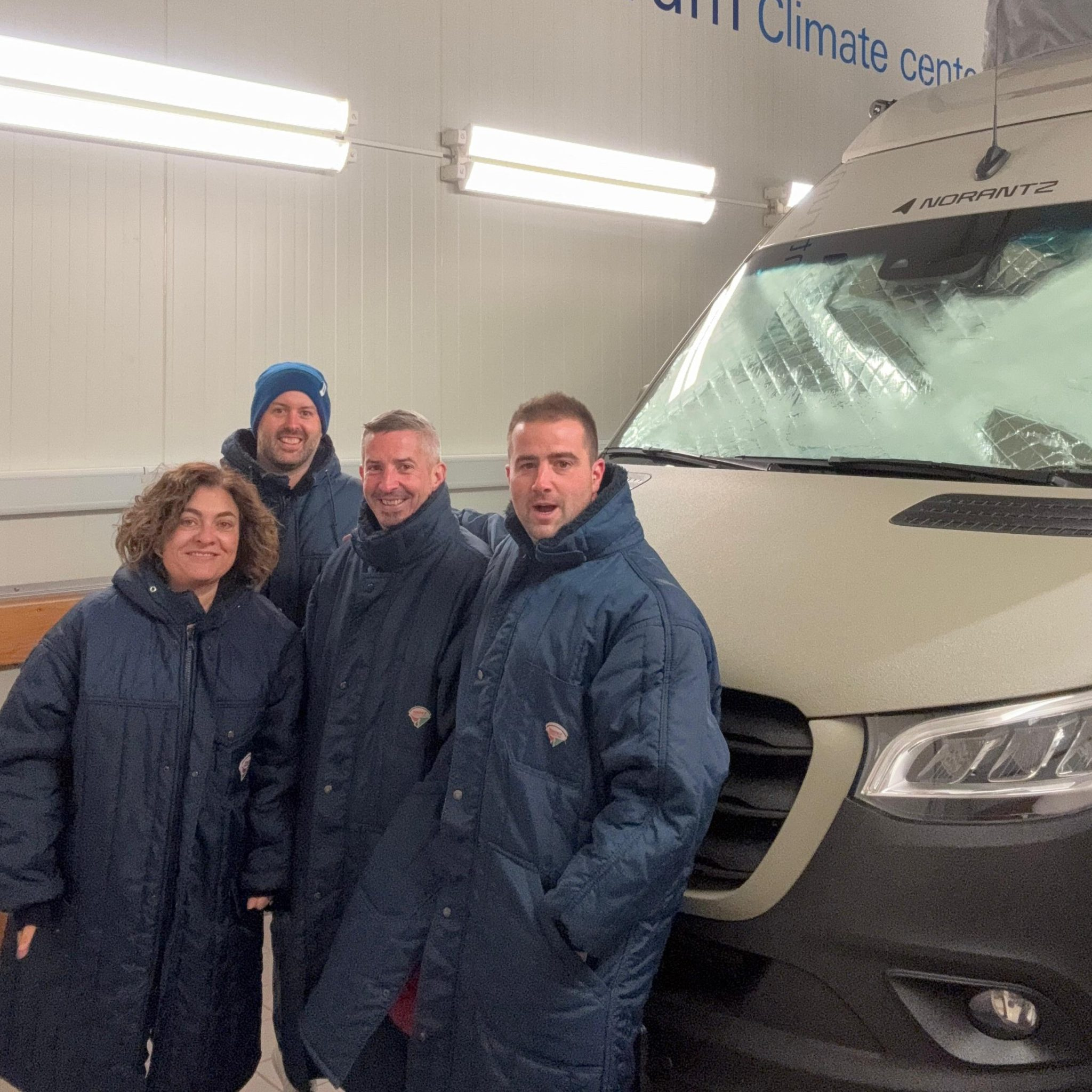
NORANTZ at the Truma climatic chamber

At –15 °C, the NORANTZ models face their most extreme challenge yet. Inside the Truma climatic chamber, every system and corner of the interior was tested, proving that comfort and engineering can withstand even the harshest winter conditions.
The challenge of extreme cold
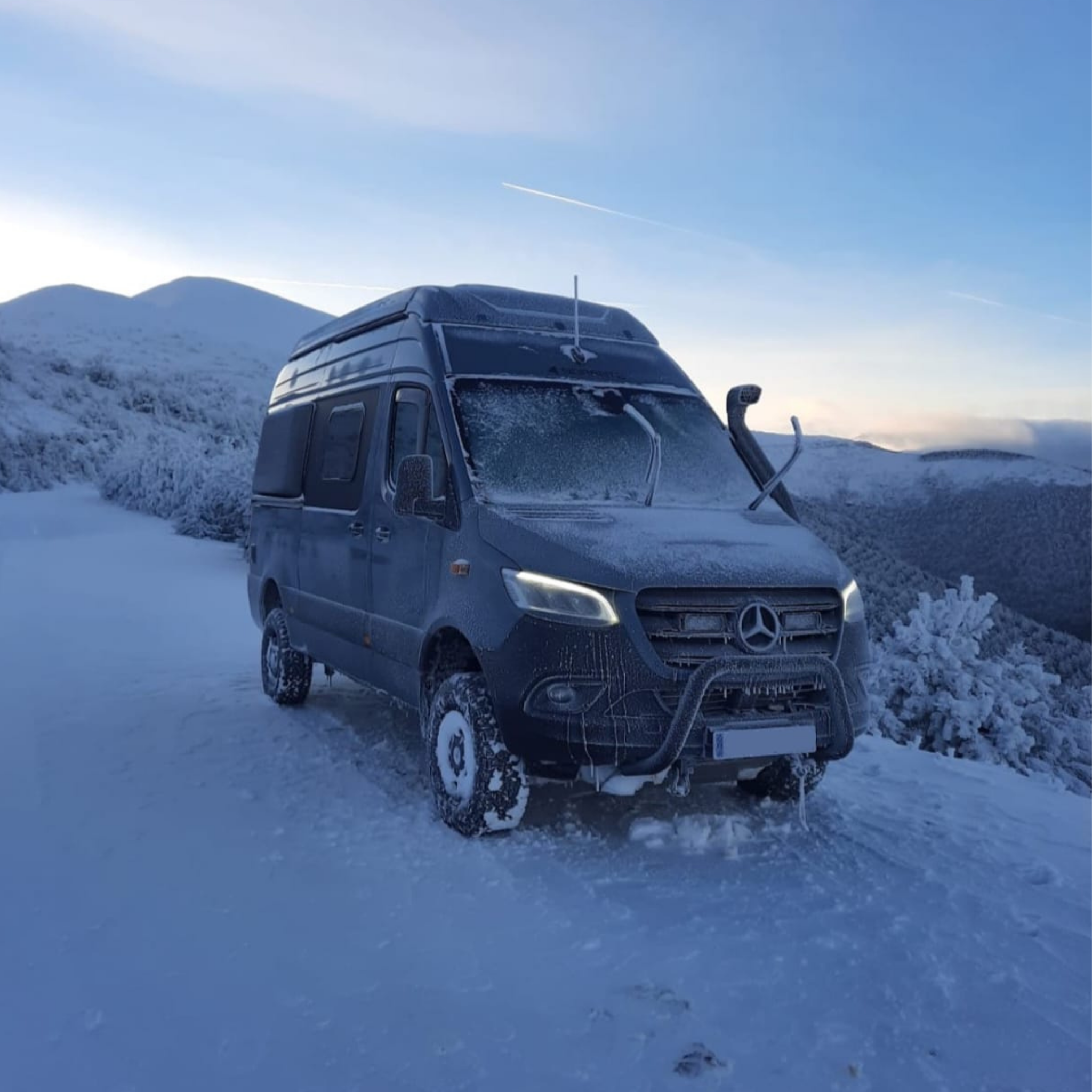
Winter has its own language. At –15 °C, every detail, every choice, and every design element matters. For our models, this was not just another test: it was a challenge to prove that our construction philosophy could withstand the harshest cold.
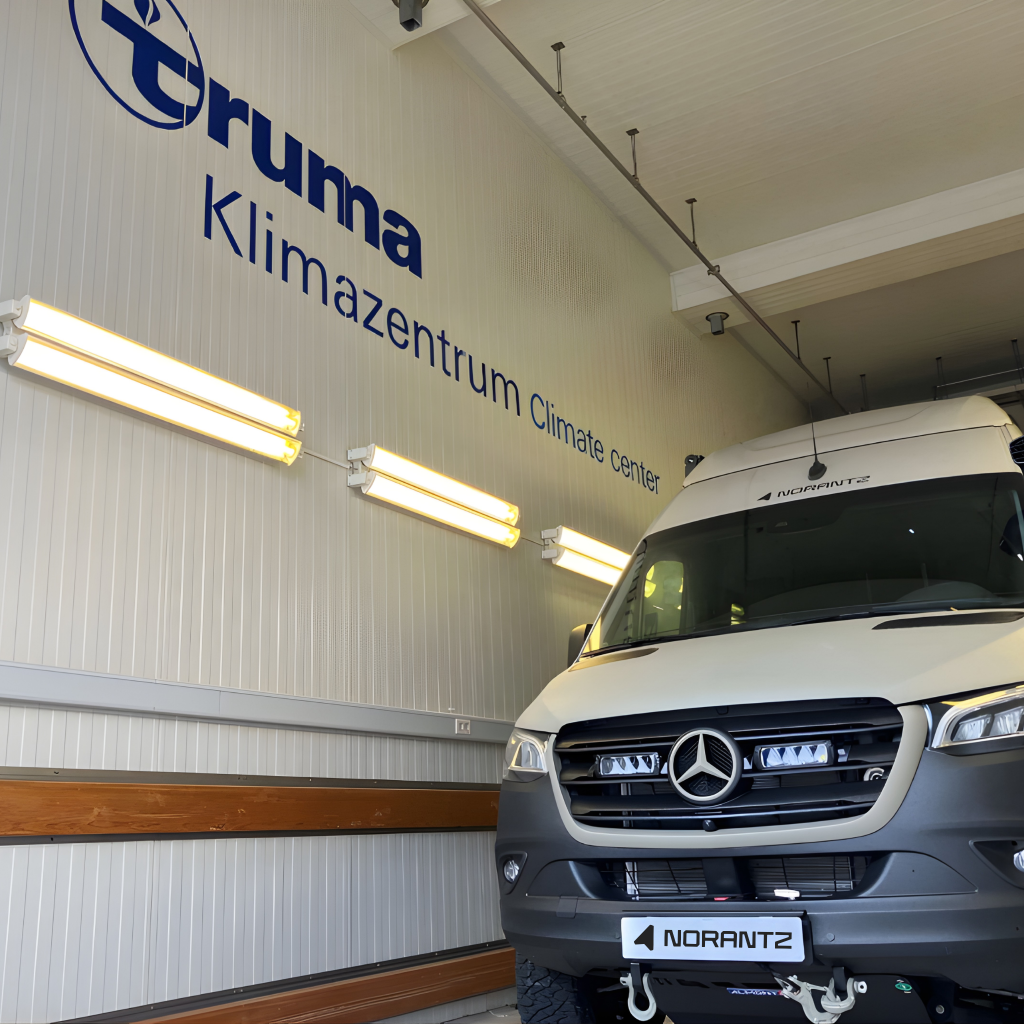
At the Truma Climate Centre, the vehicle was placed inside a climatic chamber, where winter is not a season but a controlled and precise reality. The thermometer slowly dropped to –15 °C. Only then did the real adventure begin.
Living the experience
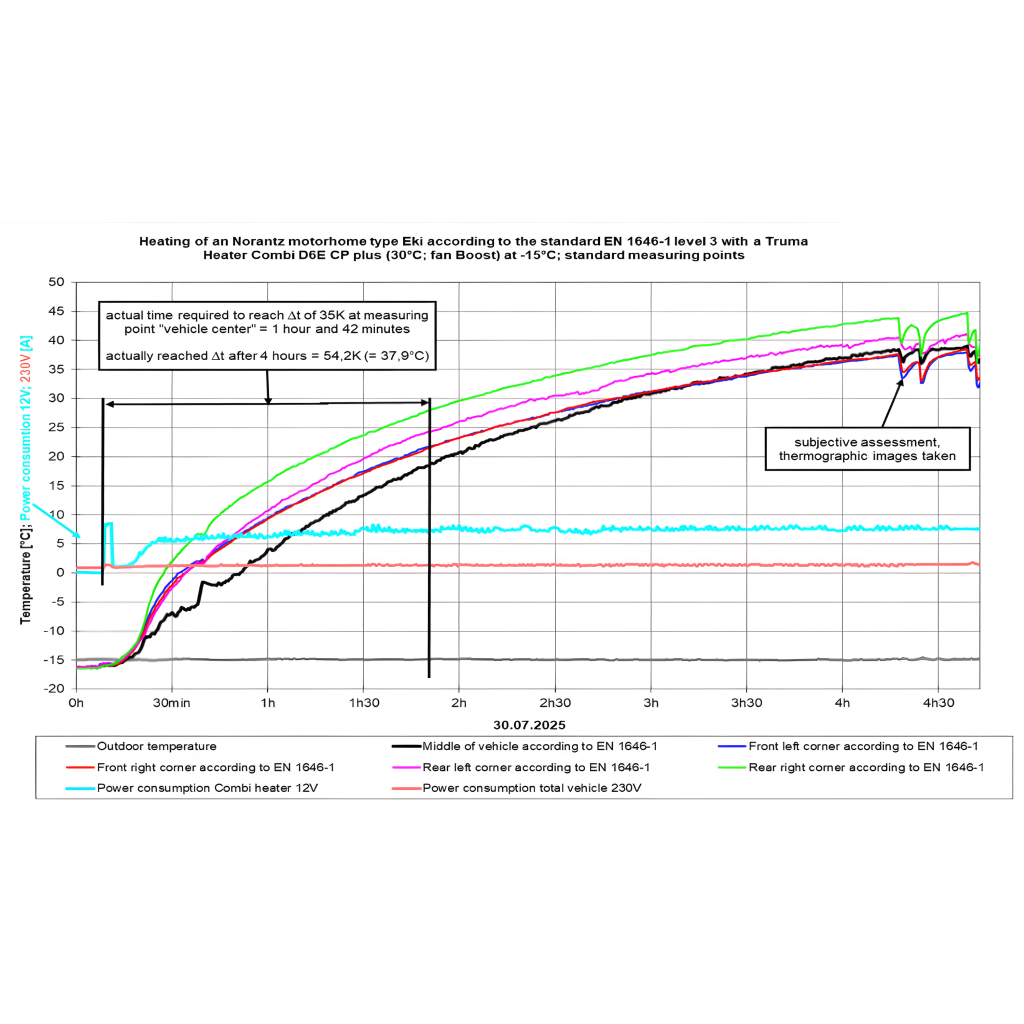
This test was not just for show; it was the validation of our compliance with the EN 1646-1 Level 3 standard, the highest certification for thermal insulation in leisure vehicles. It is the definitive proof of our engineering.
To pass this standard, the interior must heat from –15 °C to +20 °C in less than 4 hours. Our models achieved this with remarkable efficiency, ensuring warmth was spread evenly throughout the cabin without any critical condensation.
There were no cold spots. All systems, including the water circuit, remained fully operational under extreme cold. The steady heat and the efficiency of the systems revealed that a NORANTZ campervan doesn’t just endure winter; it is a natural extension of its design, built for off-grid living no matter what the thermometer says.
Built Without Limits
Thermal imaging confirmed the integrity of our construction, showing no significant thermal bridges and a thermal envelope designed for real winter conditions. The data validates what truly matters: comfort and safety when temperatures fall far below zero.
At NORANTZ, extreme conditions are not hypothetical scenarios; they are where we begin. The EKI and IPAR models are not simply 4×4 campervans but exploration platforms built to perform when it matters most
Discover more about the EKI and IPAR in our campervan configurator.